
Optimizing Flag and Contact Football: 7 High Level Performance, Safety & Strategy Tips For Coaches
- Coach David Frederick
- Jul 17, 2025
- 5 min read

Whether you're coaching a youth or high school flag football team, or preparing high school athletes for contact football, the overall goals remain the same: build and improve skill, introduce and reinforce fundamentals, enhance performance, ensure safety, and develop smart high football IQ athletes.
While flag and contact football obviously differ in physical demands, specs, field size, and rules, optimizing both formats requires a focused blend of conditioning, technique, and strategic player development, coaching, and X's and O's development.
Here are few ideas to optimize your coaching for both flag and contact football whether at the youth or HS level.
1. Understand the Game Differences First
It should be obvious if you coach or play, but Flag and Contact are very different! Before optimizing performance, recognize how flag and contact football diverge:
Flag Football: No tackling. Emphasis on agility, route precision, quick decision-making, and speed. Tight field space, limited players, short game time, etc.
Contact Football: Tackling allowed. Requires strength, proper technique, blocking, physical endurance, all 11 players must execute, complex X's, O's and Y's, and mental toughness.
2. Conditioning with A Purpose
Flag Football Conditioning
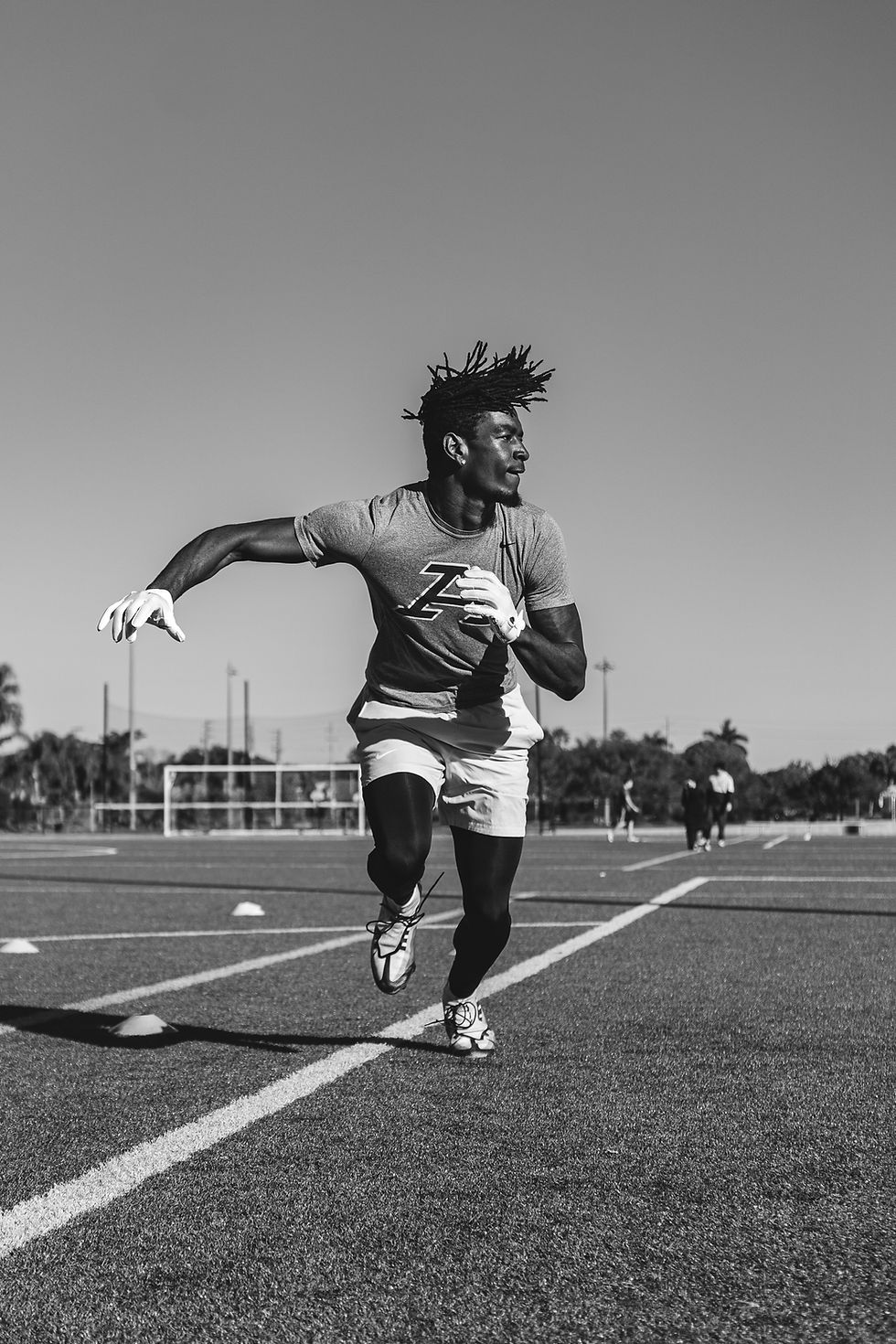
Focus on explosive speed, quick cuts, and change of direction.
Incorporate HIIT drills, ladder drills, and short sprints.
Use reaction drills to simulate in-game decision making.
Focus on short routes and exploding in short spaces
Focus on team movement.
Contact Football Conditioning
Balance explosive, speed and endurance (your WR's should be the most conditioned players on the field!) with power & HIIT training.
Include position-specific drills: linemen need core and leg strength; skill players need sprint acceleration.
NEVER use the same training protocol for every player. Position specific training will reduce injury and improve performance!
Add resistance and cross fit / whole body training (sled pushes, tire flips) and body control exercises to prevent injury.
Incorporate discipline and focus drills.
3. Technique Matters More Than Talent
Technique isn't just important—it’s critical, which is why I always push technique, fundamentals, and execution.
In Flag Football:
Emphasize flag pulling technique—proper pursuit angles and hand placement.
Teach precise route running on a shorter field and defensive positioning.
Use cones and visual aids for footwork and spacing.
FOCUS ON HIPS! Effective hip rotation enables the receiver to get YACS and evade the flag pull. Hips, Hips, Hips!
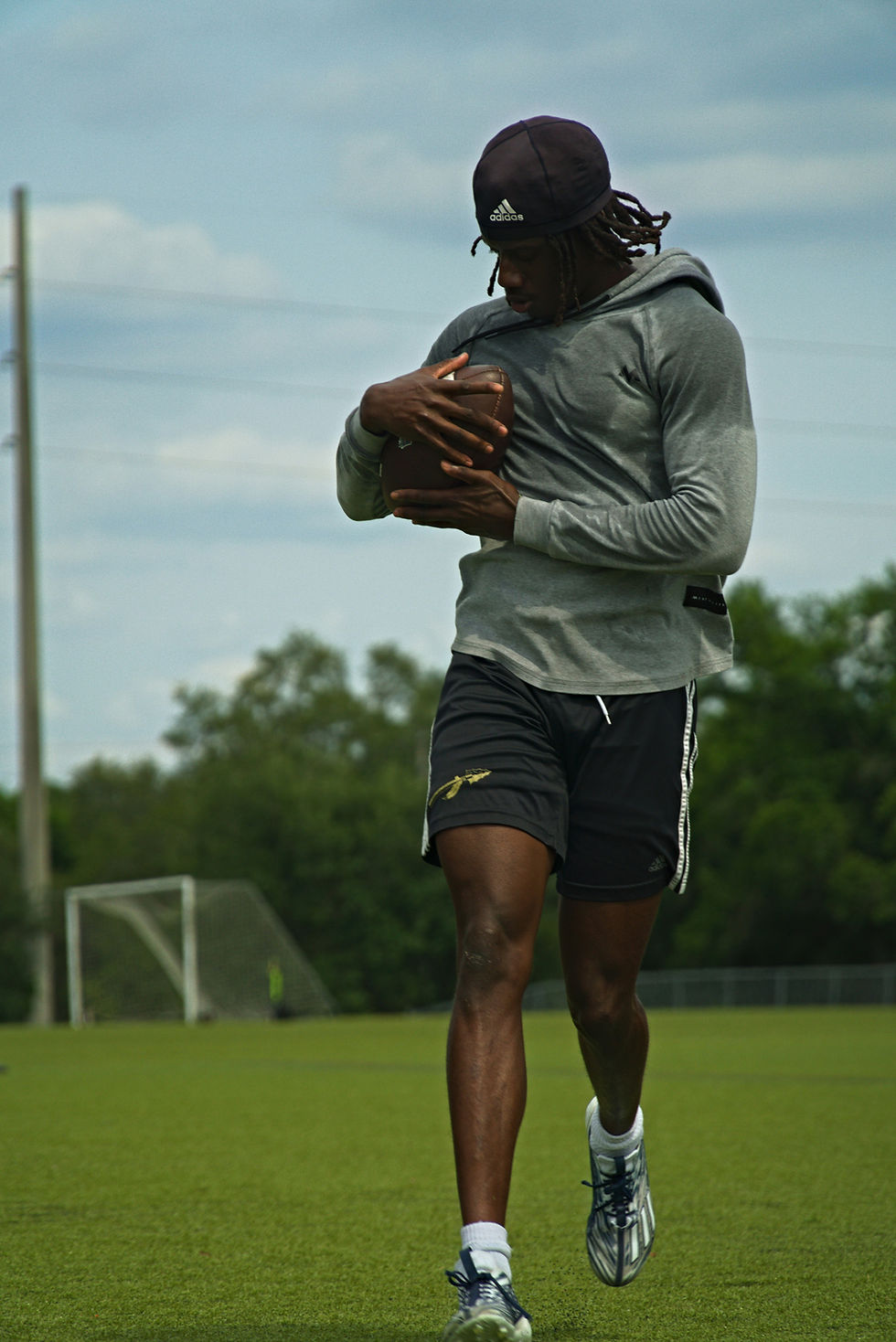
Focus on catching the football from various positions i.e. high hand, low hand, on the numbers, etc. - NO catching with the body!! This should be obvious in both contact and flag.
3 foot box. Your receivers should be able to catch the football on a 4 foot box around them.
In Contact Football:
Prioritize safe tackling form—eyes up, head to the side, wrap and roll. Think Seahawk "Hawk tackling" or "Heads Up" Tackling, etc. Proper wrapping and tackling form is CRITICAL for safe and effective tackling. NO DIVING and NO head on the numbers old school BS.
Develop blocking fundamentals—hand placement, footwork, trapping, pulling, leverage, balance.
Use form tackling dummies, tackle backs, and shield drills to reduce player-on-player contact in practice.
Position specific drills, fundamentals, and technique are key. Focus not only on the X's and O's but the Y's and coach up pre snap reads for ALL PLAYERS. Introduce and reenforce reading and understanding keys!
Proper stance, proper route running and break downs, proper angle pursuit, etc.
4. Mental Game and Play IQ
If you have played or coached football, you know football is as much mental as physical.
Train situational awareness: down-and-distance, clock management, and field position.
Encourage film study even at the youth level to identify patterns, keys, and improve decision-making. At the HS level, demand film study and audit time on film through Hudl, etc. If you are not watching film, you are NOT serious about be contributing player let alone elite.
Install a playbook gradually, ensuring understanding and precise execution over volume. Slow is smooth and smooth is fast. To many teams, execute to fast and do it wrong. Now they have practiced the play wrong and sloppy. Take the time to install properly and EXECUTE! Simplicity executed well beats complexity executed poorly.
Be disciplined with your play design and plays. You don't need 500 plays. It will create chaos for your offensive coaches. Be disciplined and have a manageable amount of plays so you can find them on your call sheet and execute! Your coaches and players will love you for it! You can win football games with a smaller number of plays run out of different formations. Trust me! Focus more on situational football and scripts.
5. Injury Prevention and Recovery
Injury prevention is optimization and a coaches responsibility
Warm up thoroughly with dynamic stretches; cool down with static stretches.
Encourage proper hydration and nutrition, especially during summer practices. Work with your AT to discuss and reenforce with your players.
Use sports physical therapists and trainers for prehab routines like band work, ankle mobility drills, and shoulder stability.
For contact football: Emphasize helmet safety, neck strength, and limit full-contact reps in practice when possible. In fact, I would recommend no more than 15 minutes to ½ hour of full pad contact on 1 DAY of the week during full team reps. Otherwise, shells!
Work with your AT to address any areas that may reduce injuries.
If you don't have an AT, do your research on ways in which to reduce injuries. Even flag has issues with concussion, and other joint injuries.
6. Practice Planning and Reps
Maximize your practice time:
USE A PRACTICE PLAN!! Don't wing it and don't just jot things down 15 minutes before practice. DISCIPLINE starts with the coaches. If you need help on this, see my blog post on this topic and template.
Keep sessions structured with time blocks (e.g., 10 min agility, 15 min offense install).
Include game-like scenarios regularly: 2-minute drills, red-zone plays, 3rd and long.
Reps should be short, high-quality, and with purpose—no wasted motion, no wasted time.
DO NOT SKIMP on Special Teams in practice. Great football teams are well-versed, prepared, and exceptional in all 3 phases of the game!
7. Build Team Culture
Whether it's a rec flag team or a varsity contact squad:
Focus on discipline and execution. Team and players!
In contact football, ALL 11 players MUST DO THEIR JOB or the machine breaks and doesn't execute.
Promote a growth mindset: Mistakes are learning opportunities. Fix the problem and get back at it. Next Play mentality.
Use leadership drills: add weekly game captains to your permanent team captians, peer coaching, and group/team accountability. Practice player of the week, etc.
Celebrate effort and execution, not just outcomes.
Focus on developing not just championships, but the number of champions developed!
Build a team of excellence. If you want more information on this or how to do this, check out my coaching clinics on this topic here!
Final Thoughts
Optimizing football at any level is about working smarter and more effectively, not just harder. Whether it's teaching a 10-year-old how to pull a flag or training a HS stud linebacker to shed blocks and close the gap, the best results come from intentional coaching, focused reps, organization, fundamentals, effective positional and team coaching, and a commitment to player development.
Football—flag or contact—builds character, teamwork, and resilience when done right. It's hard but fun. Your job as a great coach is to build smarter, safer, and faster athletes who can execute at the highest levels, win championships, and develop champions on and off the field. And that starts on the practice field.
LFG!
Coach David Frederick

Comments